The music behind the show
What is fado? A short history
Where fado comes from, what the word means, how it moved from Lisbon taverns to UNESCO's list in 2011, and what to listen for in a live show.
Reserve a place for the fado hour ↗Quick answer
Fado is Lisbon's urban song, a voice with guitar accompaniment that took shape in the city's working-class quarters in the early nineteenth century. UNESCO recognised it as intangible heritage in 2011. The word is usually linked to the Latin fatum, meaning fate, and many songs play on that double meaning of destiny and song.
A song of fate
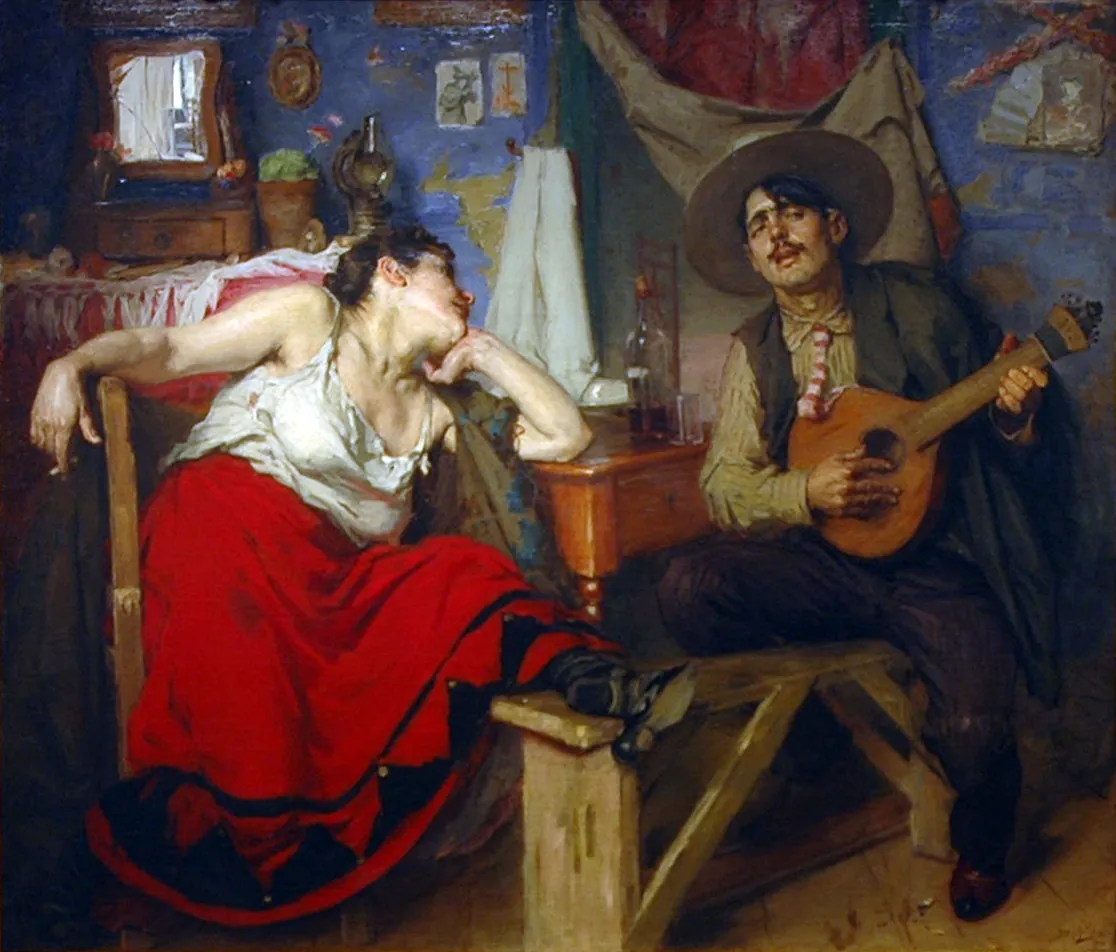
Fado is a Portuguese word meaning destiny or fate. Wikipedia says it possibly comes from the Latin fatum, meaning fate, death or utterance, and that many songs play on the double meaning of the word and the genre. In popular belief, fado is mournful, about the sea or the lives of the poor, and tied to saudade, a longing for something lost. That is only part of it. Wikipedia adds that fado is today seen as a form of song that can be about anything, within a traditional structure.
How it began
Nobody can pin down fado's start. The scholar Rui Vieira Nery, quoted by Wikipedia, says the only reliable information goes back to the 1820s and 1830s at best. The Museu do Fado says it was born in popular settings of nineteenth-century Lisbon, indoors and outdoors, in gardens, streets, alleys and taverns. Early singers were sailors, bohemians and other working people. Historians have proposed several origins, and Wikipedia calls none of them compelling. It probably grew out of older genres rather than one source.
A mix of musics
UNESCO describes fado as a Portuguese multicultural synthesis. It lists Afro-Brazilian sung dances, local traditional song and dance, rural music brought by successive waves of internal migrants, and the cosmopolitan urban song patterns of the early nineteenth century. That mixture fits a port city with sailors, dockworkers and people arriving from the countryside. Musically, Wikipedia notes that fado uses both duple and triple (waltz-style) time, and that the music pauses at the end of a phrase while the singer holds the note.
Severa and the legend
The Museu do Fado calls Maria Severa Onofriana (1820–1846) one of the greatest myths in fado's history. A singer who died young, she became the subject of a love story with a nobleman, Count Vimioso, retold in a novel, A Severa, published in 1901. In 1931 the story became the first Portuguese sound film, directed by Leitão de Barros. The legend is part history and part invention, but it set a picture of fado that lasted: a voice from the margins, singing about love and misfortune.
From taverns to theatres and houses
In the late nineteenth century, according to the Museu do Fado, the ten-verse stanza became the stable poetic form of fado, and the Portuguese guitar was defined as its companion. Fado also reached the stage: it appeared in the scenes of Lisbon's Teatro de Revista from 1870. In the 1920s and 1930s, radio, recordings and new regulation of venues followed. By the 1930s fado was heard in a ritualised way in fado houses, mainly in Bairro Alto, and the museum calls the years between the 1940s and 1960 its golden years.
Amália, silence and revival
The Museu do Fado says fado's spread abroad consolidated in the 1950s, especially thanks to Amália Rodrigues, who remained its national and international star until her death in 1999. It records hostility toward fado in the years right after the 1974 revolution, and a return of its own space once democracy settled in 1976. Since the 1980s it has been recognised as central to Portuguese music, and in the 1990s Mísia and Cristina Branco took it into world-music circuits, followed by Mariza.
Read next: Amália Rodrigues and the voices of fado
UNESCO and the living tradition
In 2011 UNESCO entered fado on its roll of living cultural heritage, the Representative List. The entry describes music and poetry practised by communities across Lisbon, heard from professionals at concerts and in small fado houses, and from amateurs in neighbourhood associations. Older singers pass it on informally, often inside families. So UNESCO counts the small fado house among the places where the tradition lives.
What to listen for
Listen first to the voice. The Museu do Fado says the simplicity of fado's melodic structure values the interpretation, so the singer's phrasing carries the song. Listen to the pauses at the end of a phrase, when the singer holds the note. Then notice the instruments, which are the Portuguese guitar and a guitar, and the silence in the room. The poetry usually deals with love, luck, individual fate and the city's daily life, whether or not you follow the Portuguese.
Read next: The Portuguese guitar in fado
Frequently asked questions
What does fado mean?
It is Portuguese for fate or destiny. Wikipedia links it to the Latin word fatum, and many songs play on the double meaning of the word and the genre.
Is fado always sad?
No. Popular belief says it is mournful, and it is often linked to saudade, but it can be about almost anything within its traditional structure.
When did UNESCO list fado?
In 2011, on UNESCO's Representative List of living heritage.
Sources